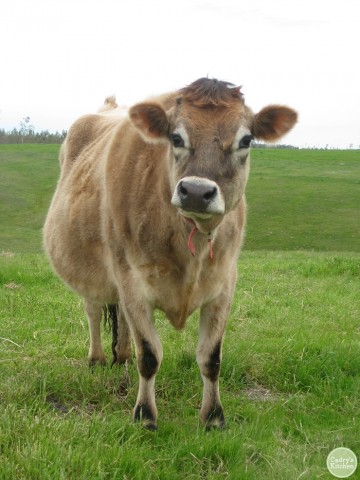
This is my second post in a series about how going vegan changed my life. First, it made my heart grow three sizes. As for the next thing it did…
The amount of produce that I eat has grown three sizes as well. It’s spilling out from its once-roomy vegetable drawers to fill up the rest of the refrigerator. Now my freezer is full of dried goods, and my cupboards are packed with spices. While it may seem counterintuitive, going vegan changed my life by making my diet more varied and more colorful than ever before.
It’s something that even my best friend noticed. You should know, she is not vegetarian. She eats animals, dairy, and eggs. So when she told me that I eat a wider variety of food than anyone she knows (and I’d wager that everyone else she knows eats animals and animal-products), it stuck out to me. That, I think, is a thing that can surprise people about a plant-based diet. Something that seems to be about limits, can actually be really expansive. Humans are creatures of habit. We tend to gravitate towards the same items at the grocery store, the same restaurants, and even the same menu items at those restaurants, but when choosing a plant-based diet, the game changes. The things that were once the go-to items now must be reconsidered.
Of course, even non-vegetarians eat “vegan food” every day. They just don’t call it that. They call it bean burritos, peanut butter and jelly sandwiches, bruschetta, pasta with marinara, french fries, crudites, saag aloo, hummus and pita, falafel, almonds, bananas, cherries, tomato soup, toast with jelly, chips and guacamole or salsa… Still, when people go vegan, they often notice foods that they’ve ignored before – like leeks, fennel, daikon, persimmons… That’s why a shift to a vegan diet often brings about a new interest, passion, and education in food. Reading about the healthfulness of a plant-based diet, getting new cookbooks, learning how to cook unfamiliar foods (even if it’s something as basic as making beans from scratch or cooking dried lentils or barley), and venturing outside of simple staples like broccoli florets and baby carrots means people often find more excitement and adventure in their diets than ever before.
That said, when people first go vegan, sometimes they want to recreate their current diets with vegetarian counterparts. They might replace dairy-based cheese for Daiya or chicken’s breast for Gardein. For new vegans, these foods can help with the transition. We are creatures of habit. We crave salt, sugar, fat, and texture. We crave what is familiar. So in those first few months when someone is used to their Standard American Diet, it’s not uncommon that a person would reach for Morningstar Riblets or something of that ilk. However, most of the vegans I know don’t stick to those convenience items or even gravitate towards them very often after the transition-period. One, they’re more expensive. Two, they can’t compete health-wise with non-processed fruits, vegetables, beans, etcetera, and three, tastes change.
When I first went vegetarian, I was used to the taste and texture of meat. Like many people, when I stopped eating meat, it wasn’t because I didn’t like it. I even remember joking before I went vegetarian that if there were people who could call themselves vegetarian and eat fish, I was going to be a vegetarian and have a steak every now and again. However, the more I opened my heart to the lives and deaths of the animals who suffer for it, and the more I read about the healthfulness of a plant-based diet and the disease-promoting aspects of a diet based in animal products, the less important my learned habits and old preferences became. I can have plenty of other things for lunch. Cows, ducks, chickens, goats, sheep, and fish only get one life.
So what do I buy? I get a lot of fresh produce, and I like to get it as we need it. That means that my husband or I go to the grocery store almost daily. The produce that we buy varies, depending on what’s available and in season. Obviously, people can go vegan and just hit the grocery store once a week and stock up. That’s just not my preference. So if I had to write out a grocery list for a week for the two of us (taking into account that we already have things like spices and seasonings on hand), it would look something like this:
As for dining out, I eat out less often than I did before I went vegetarian, and now when I do go out I visit different restaurants. I’d almost always prefer to make something at home, exactly the way that I like it with lots of fresh, organic ingredients and minimal amounts of oil and salt. It’s cheaper at home and it tastes better. When I do go out, my preference is to eat at vegan restaurants. It means simpler ordering and more options. Everyone can eat there – both vegetarians and non-vegetarians. Best of all, it’s a relief to look through a menu and see only life-giving foods and not life-taking foods. Of course, that’s not always a possibility. My second choice of restaurants are vegetarian restaurants, and third would be vegan-friendly restaurants, which are often ethnic restaurants (e.g. Indian, Ethiopian, Thai, Chinese, Mexican).
One more unexpected turn in eating all of this beautiful, colorful food is that I take more pictures of my breakfasts, lunches, and dinners than I ever did before. This, my friends, is not uncommon. (I had to smile when I went with a new-vegan a few months ago to Real Food Daily and watched her clicking away as each order came to the table.) So be warned. Plant based food is not only delicious, but also attractive. You may want to invest in a new camera.