Tag Archives: Raw

Nearly Raw Reuben Bites

17 Feb

Today I’m doing a guest post over at Fork and Beans.  If you’re not familiar with Cara’s fun and creative blog, you should get acquainted!  Today I’m posting over there with a recipe for Nearly Raw Reuben Bites.  They have the most prominent flavors that we love about a reuben on a fresh, raw cabbage leaf.  I hope you’ll join me!

Collard Leaf Tacos with Walnut Taco Filling

11 Feb

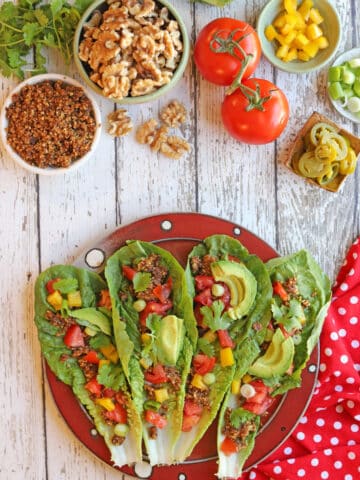
You know how it is when you settle in to a big plate of tacos…  You savor every ingredient and the mixture of salty, creamy, pungent and sweet.  And after every crumb has been licked away, you feel like pulling on a pair of tennis shoes and bolting out the door for a run.  What?  A plate of tacos doesn’t make you feel so energized that you need to get up and move?  Well, this batch of collard leaf tacos could change all of that.  It’s a balmy 20 degrees where I live right now, but there’s something about this time of year that makes me crave raw foods.  Maybe it’s my body’s way of crying out for sun through plant-based chlorophyll.  Who knows?  In place of corn or wheat tortilla shells, raw collard leaves hold all of the taco goodness in place.  (If the leaves are large enough, you can have one leaf equally torn into two shells after the thick, center rib has been removed.)

I decided to play with a recipe of my own for walnut taco filling.  I’ve made Ani Phyo’s taco walnut meat in the past and really enjoyed it, but my curiosity was piqued earlier this week when I saw that Rose over at the Dandelion Vegan Blog uses sun-dried tomatoes in her taco filling.  The sweet, chewy texture of sun-dried tomatoes is the perfect companion to the salty umami of tamari-seasoned raw walnuts.  I recently wrote about my favorite sun-dried tomatoes from Trader Joe’s, which are sealed and bagged like raisins.  They’re not packed in oil, and they don’t need to be rehydrated.  But this recipe could easily utilize rehydrated sun-dried tomatoes or oil packed sun-dried tomatoes that have been rinsed.

Collard leaf taco shells

All the fixings

This has been my lunch for two days in a row.  It’s that good.  Best of all, this meal comes together quickly with only plates, a food processor, cutting board, and knife to clean afterwards.  No heavy pans or pots to clutter up the dishwasher.  That leaves more time for going on a hike or turning on a workout DVD if you live somewhere cold like me.  Get your tennis shoes ready.  You’re going to need them.

Collard Leaf Tacos 

Serves 2 hungry people

Walnut Taco Filling with Sun-Dried Tomatoes

  • 1 cup raw walnuts (unroasted and unsalted)
  • 2 Tbsp sun-dried tomatoes
  • 2 tsp tamari
  • ¼ tsp chili powder
  • ¼ tsp paprika
  • ½ tsp coriander
  • 1 tsp cumin

Process all of the taco filling ingredients in a food processor until crumbled into small pieces.  Take time to stop and scrape down the sides, if necessary, as you process.

Taco Shells and Fixings:

  • Collard leaves, rinsed and patted dry with center rib removed (to be used as shells)
  • Red bell pepper, diced
  • Cilantro, chopped
  • Kalamata olives, sliced
  • Red onions, chopped small
  • Avocado, chopped
  • Cherry tomatoes, quartered

Fill collard leaves with taco fixings and a scoop of walnut taco filling.  Grab a napkin.  It’s going to get messy.

Claymation cooking demonstration and Top tips for great smoothies

23 Jan

It’s time for another cooking video!  This time I’ve enlisted the help of a certain clay dinosaur, who my husband has been animating via claymation since he was a boy with a Super 8 camera.  Over the years Gulp has had many adventures and swallowed many Lego blocks and Matchbox cars, but this is his first introduction to the joys of green smoothies and my Cashew Kale Shake.  (Eating cars may be one way to get your iron, but iron-rich kale is a heck of a lot easier on the teeth.)  With the help of my favorite hungry dinosaur, I demonstrate how easy it is to make your green smoothie dreams come true, even if you don’t have a high-speed blender.

Smoothies are such a delicious and simple way of incorporating more fruits and vegetables into a person’s diet.  I often enjoy them for breakfast, and it makes me feel good to kick start the day knowing that I’ve already had several servings of raw fruits and vegetables.  It sets a great tone and gives me a hit of wide-awake energy.  Hit a lull around 3 pm?  A smoothie also makes a tasty snack.

These are my top tips for taking a smoothie from good to great:

Frozen bananas are key.  First of all, bananas bring a pleasant mellowness to smoothies that otherwise might be overly sweet (like a tropical, orange, or berry smoothie) or bitter (like a smoothie with kale or collard greens).  Most importantly, frozen bananas give a thick, creamy texture that leans more towards a shake than a smoothie.

Always add ground flax seed.  It seems that every other article on health and wellness pages is about how the modern American diet is overloaded with omega 6’s while deficient on omega 3’s, creating an unhealthy imbalance.  An easy way to get omega 3’s into one’s diet is by adding a tablespoon of ground flax seed to a smoothie.  Outside of a vague nuttiness, it doesn’t add a lot in terms of flavor, but it gives the smoothie a fuller viscosity.  I like to grind whole flax seed in a coffee grinder as needed, but you could also use ground flax seed.  You’ll want to keep the open package in the freezer or refrigerator to avoid rancidity.  (Want to add raw cashews for a creamier smoothie?  While you’re grinding the flax seed, add in raw cashews as well and grind until they take on the consistency of flour.)

Blend tough greens first.  I almost never make a smoothie without greens.  It just seems like a wasted opportunity.  But without a high-speed blender, getting greens fully blended can be difficult.  The key to completely smooth green smoothies is blending hearty, fibrous greens first.  A bright green drink can already be a difficult sell to the uninitiated.  Add in chewy bits of tough kale and it’s even more of an obstacle.

Blend the greens with whatever liquid you’ll be using and continue until completely smooth before adding other ingredients.  The blender will probably need a hand with it, and so be sure to stop and scrape down the sides regularly to move the process along.  (Secret tip:  The circular handle on the lid of my non-high speed blender can be removed, leaving a small hole, and I sometimes stir the top portion of the greens while the blender is in motion.  It helps the momentum of the greens. Of course, it’s important to be careful that the spoon doesn’t come into contact with the blade, and it could be a splatter hazard if the liquid is too high.)

Vanilla soymilk adds dimension and balance.  For a long time I only used water in my smoothies.  With all of the nutrition and taste in the fruits and vegetables in the ingredient list, I didn’t think it needed anything else.  However, my feelings on this have changed.  A hint of vanilla in the background adds something special to a smoothie.  Now when I make it without, it doesn’t quite reach the same heights.

But don’t use too much.  Err on the side of less liquid for a thicker, creamier shake.  If you absolutely have to add more for blending, add a little at a time.

Ice cubes are your friend.  After a smoothie has reached its creamy and whippy perfection, I like to add six ice cubes and blend until fully broken down.  Without the cubes, it’s more like a shake or a malt, but with the ice cubes it’s all that with pleasant icy shards and a little added crunch.

A huge thank you to my wonderful husband, David, for animating, editing, and sound designing Gulp Vs. Smoothie!  You’re the best!

Beets: How to Like the Vegetables You Hate

4 Jan

I know some people feel down about New Year’s resolutions.  They think they’re a waste of time or that people use them to set unattainable standards for themselves, only to be disappointed when they fail.  For myself, I like the tradition.  I like having a holiday that invites us to look at our lives and reflect on where we’d like to improve.  It’s a chance to revisit the last year and see the places where we’ve progressed and the places where we haven’t.  And it’s a chance to take some steps that we might not otherwise without an excuse.  It’s an opportunity to plan.

For some people a New Year’s resolution might include juicing, eating more fruits and vegetables, and/or making a renewed effort at exercising.  I know I feel a real pull right now to eat more fresh, raw foods and start the morning with just-pressed juice followed up with some cardio and weightlifting.  In this clean slate time of year, it feels good to refocus.

If you have it on your to-do list for the year to add more fruits and vegetables, a good place to start is in the produce section.  We’re always hearing that despite all of the healing and protective antioxidants and phytochemicals in fruits and vegetables, people aren’t eating them in anywhere near the recommended levels.  Variety counts too.  To get all of the goodness that plants can give, it can’t be all carrot sticks and iceberg lettuce.  That’s why I’m starting a new series called How to Like the Vegetables You Hate.  I think the real key in convincing people to eat more vegetables is finding preparation methods that make even the most unloved produce palatable.

I’m starting this series with my old nemesis, beets.  Too many times I was tricked by beets.  They come in a variety of beautiful colors – orange, deep red, white, and even a variety called Chioggia that has a candy cane striped center.  I wanted to like them.  But whenever I’d have them, thinking this would be the time that beets would win me over, I’d be treated with a mouthful of dirt.  Okay, not literally, but to my taste buds, beets were bright red dirt.  There was dirt soup (borscht), roasted dirt, and worst of all, dirt burgers on a whole wheat bun.

I knew that beets were good sources of folate, fiber, vitamin C, potassium, and iron.  I knew that they’ve been shown to be protective against heart disease and even certain types of cancer, particularly colon.  However, I couldn’t get over their earthy flavor.  Then I discovered the beauty of raw beets.  So simple, so easy.  Plus, beets are sensitive to heat, which can kill its antioxidants.  All the more reason to use them raw.  Best of all, raw beets taste much more mild with a less pronounced earthy quality, especially when mixed with other flavors.


Grated beets are a colorful addition to everything-but-the-kitchen-sink salads.  I am not a three or four ingredient salad kind of person.  I like grated carrots, slices of celery, persimmons, cucumbers, radishes, different colors of bell peppers, tomatoes, roasted chickpeas, diced onion, avocado, broccoli and cauliflower florets, and artichoke hearts on a bed of massaged kale.  Whatever produce I can find in the refrigerator makes its way into my bowl with my favorite dressing.  Now added to that mix is a very vibrant beet.  To use beets in a salad, cut off the ends and peel them.  Then use a grater or chop them into bite-sized chunks.  One word of warning – red beets may make your salad kind of pink, especially if you save it until the next day.

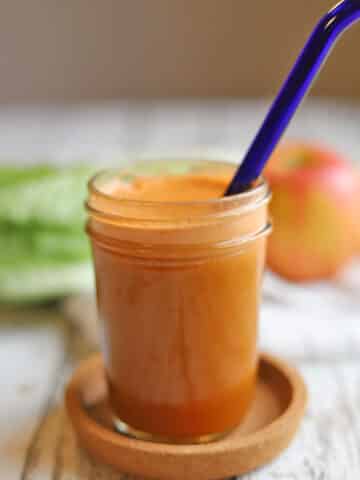
Another way to add some beet-fueled color and nutrition to your day is by juicing it with other favorite fruits and vegetables.   Unlike the green juices that generally grace our kitchen, you might have an easier time getting someone to drink juice in a shade they’re used to enjoying in a glass.  When I’m making juice, I don’t bother peeling any of the vegetables, including the beets.  Since I use all organic produce, I just clean them thoroughly with a vegetable brush and pop them into the juicer.  Lately I’ve been enjoying this Calm Morning Juice.  It has a mild flavor with celery and cucumber, along with a little bit of sweetness from the orange, carrot, and beet.  It’s a pleasant drink for sipping and easing into the day.

Is there a fruit or vegetable that you want to like but so far haven’t been able to enjoy?   

Calm Morning Juice

Serves 2

  • 1 beet
  • 3 celery stalks
  • 1 carrot
  • ½ medium-sized cucumber
  • 1 orange, peeled

Juice all ingredients.  Pour into 2 glasses and serve.

Kickin’ it in Kansas City: Part One

31 Jul

On a recent trip through Kansas City, I was eager to check out some vegan eats.  After my brief visit last year, I knew that this town in the middle of Missouri offers more than first meets the eye.  The first stop was FÜD, a place we tried and loved in the past.  It’s an all-vegan restaurant with a focus on local and organic cooked and raw cuisine.  When we arrived, the place was jumping.  The tables were packed, and the server working the floor was running table-to-table to get everything done.  One of the owners was spinning records and setting a relaxed mood as diners chatted and savored their dinners.  We were seated near the window, and my husband placed an order for a vanilla shake to cut the edge off the unspeakably hot weather.

When the shake arrived, I knew my husband was going to have less of that shake than he’d initially hoped.  He took one sip and joy spread across his face.  “This is literally the best shake I’ve ever had,” he said.  Of course, I had to have a taste.  And then another.  The mouthwatering shake had undertones of malted flavor and was a creamy blend of soft ice cream and small, crunchy ice chunks.

Jackfruit Reuben

Cheesy mac

For our main courses, my eyes stopped at the jackfruit reuben.  I’d become a fan of jackfruit at the now defunct Pure Luck in LA, and I was eager to try this unusual spin on my favorite sandwich.  For my side, I noticed the child at the adjacent table was diving into his macaroni and cheese, and in an unusual twist, I added a small bowl of that to my meal as well.  The reuben was generous in size and unlike any reuben I’ve ever experienced before.  The jackfruit has a soft texture, and so the sandwich has a lot of give, except for the toasted bread encasing the filling.  It tasted as if the jackfruit had been marinating in pickle juice (and one would guess beet juice from the color as well).  It had a salty, tangy flavor that was very unique.  The macaroni and cheese was a mild, melt-in-your-mouth classic.  As a testament to it, I was unable to finish the whole thing, and so I took home leftovers.  My non-vegetarian nephew gobbled up all of the macaroni and cheese, and I don’t think he had the slightest clue that the cheese wasn’t made from cow’s milk.

My husband ordered the nachos, which were piled high with wild rice and mushroom meat, goji cheddar, guacamole, and pico de gallo.  It could easily have served a table of four as an appetizer.  When my husband finished, it looked like he’d barely touched it, although he was stuffed.

Tune in tomorrow when our appetites return and we go out for coffee and scones.  The deliciousness continues…

Silky Smooth Homemade Almond Milk

14 Jul

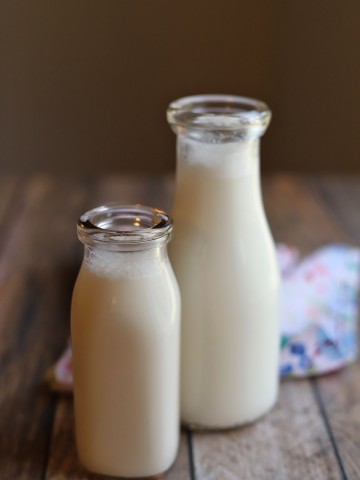
Some things bring more awe than they deserve for the amount of work entailed.  Examples?  Making chocolate-covered strawberries, doing the Electric Slide, or folding a cootie catcher.  (Why are cooties always so wily?)  I recently came upon another unnecessarily impressive task when, after years of reading and deliberation across the blogosphere, I tried my hand at making my own almond milk.  And when it came together ridiculously easily, I still couldn’t help myself from feeling like a magician, holding up two mason jars of homemade almond milk, and feeling a surge of pride.   With a dumbfounded smile I turned to my husband and said, “Look what I made!”  (Then before sharing my jar with him, I tested him for cooties.  Can’t be too safe.)

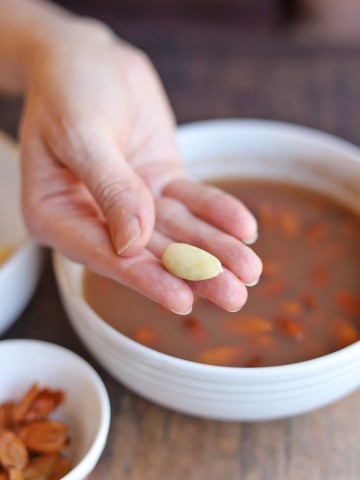
If you want to easily impress your friends and family too, just soak a cup of raw almonds in water overnight.

Then drain the almonds and add them to a blender with 6 cups of water.  (I just filled my blender to the top line.  Some people add a dash of vanilla, sweetener, or a sprinkling of salt, but I didn’t think it was necessary.)  Mix for a couple of minutes, until well-blended.  Pour the almond mixture through a cheesecloth and into a pitcher or bowl.

What results is a creamy and nutty milk that’s great for smoothies, baking, cooking, or drinking cold by the glassful.  Just add cookies.

Before I make my next batch, I’d like to invest in a better straining cloth, instead of cheesecloth.  I found cheesecloth at my grocery store for only two or three dollars, but it would be nice to have something I can reuse.  (Although, I was able to use it several times by rinsing and hanging to dry.)  I’ve heard of people buying paint strainer bags from the hardware store, jelly strainer bags, or nut milk bags from Amazon or sites specializing in goods for a raw diet.  Some people just use old cotton t-shirts.  I’ll have to keep trying to see what works best for me.

I haven’t found a great way of using the leftover almond pulp, but I’ve heard of people putting it into baked goods.  I skipped out on that idea, because I didn’t want a boomerang task.  (Do one task and it immediately requires more work.)  So I just used the almond pulp in the shower as a natural exfoliator.  It’s surprisingly gentle, even on the face.

Oh, and by the way, you’ll be happy to know that my husband tested negative for cooties.  Our marriage is safe.

Happy slurping – Cashew Kale Shake

7 Jul

When I left LA there were certain things I was worried about missing – friends, the weather, palm trees, mountains, the ocean, Sundays wandering the sun-drenched streets of Old Town, and such a wealth of vegan restaurants that I barely scratched the surface in my 13 years there…  (Someone hold me.  Please.)  Nestled in that grouping of loved people, places, and things was the delectably green and enticing sweet kale shake from SunCafé in Studio City.

Whenever I’d visit their restaurant, I’d overhear people ask with some derision about the shake… “A kale shake?”  The next sounds I heard from them would occur twenty minutes later when they were eagerly slurping up the final creamy droplets at the bottom of the glass.  Sometimes I’d drive to Studio City for the sole reason of attaining one – so filling, a dessert emblazoned with the goodness of kale.  In fact, one time a friend came into town who is an even bigger kale geek than I am.  She split a kale shake with me at brunch and then persuaded me to go back again in the late afternoon, so that she could have one of her own.

Now that Studio City is hours away even by plane, I’ve been eager to recreate the shake for myself.  Unfortunately, with no Vitamix or other high-speed blender to attain the silky smooth quality that is vital, it seemed an impossible dream.

Then recently, it hit me that the same coffee grinder that I use to grind flax seed for smoothies could also be used to turn raw cashews into a light flour or meal that would melt in a green shake.  So after some trial and error, I bring you this little bit of LA sunshine in a frosty cup.  It’s So Cal with a straw.  I don’t have a sweet kale shake here for a side-by-side comparison, of course (but if you want to mail one to me could you also include some wots from Rahel?).  However, I think it’s a hit, a palpable hit.

This full-bodied shake is a wonderful treat in the work refrigerator when hunger hits around 11:00.  It would also be fun for a Wizard of Oz themed party.  It could be called the Wicked Witch of the West – post bucket.  What a world.  What a world.  Whatever you call it, you’ll have to say it in the moments before the shake lands in front of your hot little hands.  After that, your mouth will be gloriously full.

Cashew Kale Shake

Serves 2

  • 4-5 leaves of any variety of kale (without center rib) – about 3 ½ cups  (Curly kale is my favorite)
  • 3/4 cup vanilla soy milk  (Can be replaced with any non-dairy milk or water)
  • 1/3 heaping cup raw cashews
  • 2 Tbsp flax seed
  • 3 bananas, broken into chunks and frozen
  • 6 ice cubes

Blend kale and vanilla soy milk in blender until completely smooth.  (You may need to stop the blender and stir for complete blending.)  Grind the cashews and flax seed in a coffee grinder until they become a smooth meal.  Add the frozen bananas, cashews and flax meal to the blender.  Blend.  After it is fully blended, add the ice cubes and blend to desired consistency.

A Trip to the West Coast: My Southern California Favorites

10 Apr

Weeks or months before visiting a new city, the vacation begins.  Through blogs, websites, travelogues, and guidebooks, in my mind I’m already there.  I’m visiting restaurants, relaxing in a cozy hotel or bed and breakfast…  I’m gallivanting through shops, hiking untracked trails, and skipping rocks in previously unknown ponds.  Visiting Los Angeles last month was different than that.  Since I lived there for 13 years, returning to my old stomping grounds was more like revisiting memories, taking walks down another dream.  Rather than turn to the outside world for inspiration on where to go, I asked myself what I needed to see again, trek again, taste again.  In the weeks before the trip, it became nightly dinner conversation for my husband and I to ponder what were the top sites on our itinerary.  Unlike most visitors to L.A. we didn’t need to see Mann’s Chinese or the Griffith Park Observatory, no Walk of Fame, and no Disneyland.  Okay, Disneyland.  But not those other places.

Soon our 6 days were all lined up with the friends we’d see, places we’d go, and the meals we’d eat.  If I had to write a list of my favorite places in Los Angeles, it would look like this:

Rahel Ethiopian Cuisine, our favorite restaurant in the world, not just Los Angeles.  (I’ve written about my adoration of Rahel before.)  The ladies who work at Rahel, including Rahel herself, greeted us with smiles, asking where we’d been.  (I didn’t realize we went that often.  Apparently, we did!)  The people who work there are always so warm.  We quickly found the Hudade combo and started salivating in anticipation.  The melt-in-your-mouth wots scooped with spongy and somewhat sour injera make for a hearty and flavorful feast.  I’ve made Ethiopian food at home, and it’s always good, but it just can’t match what they do at Rahel.

Flore in Silverlake is an entertaining place to people watch.  Hipsters abound with their look that seems to say, “It took me an hour to look like I just rolled out of bed.”  Even Flore itself has ironic rundown pictures on the walls, a disheveled look, an obtrusively loud juicer, and cramped seating that can be hard to maneuver on weekends.  But there’s still something about the place with its casual vibe and organic, vegan fare that’s simple but delicious that keeps me coming back.   After a close race with the Portobello Tacos, the Basmati Brown Rice Bowl with chewy baked tofu and sauerkraut on the side won out.

After lunch, we walked around Silverlake.  It has lots of unique independent shops, tea stores, juice bars, and a store devoted to spices called Spice Station.  Experts* say that walls packed with jars of spices from around the globe may be what heaven looks like.  (No experts were interviewed, but one can assume…)

For the most part, the breaded and fried fare at Native Foods is hardly health food with its nachos, pizzas, burgers, fried seitan and ranch dip, but for that reason it makes going there a lot of fun.  It’s not the kind of food I make at home, and that’s exactly why it’s such a treat to go and tuck into something so indulgent.  My personal favorite is the Oklahoma Bacon Cheeseburger made with seitan, covered in tempeh bacon, fried pickle chips, and a melty plant-based cheese.  I like to get it with a side of their kale and it almost legitimizes the meal.

My favorite location is their Costa Mesa location for its breezy atmosphere and fun little shops in the same site, called The Camp.  It’s also only twenty minutes from Disneyland, and so it fits with the day to hit it for an early lunch or late dinner.  (For my other meal to eat at the park I packed a raw kale salad.  Seriously.)  Actually, I think it would be great if Native Foods opened a location at Disneyland like Babycakes has done at Disneyworld.  Native Foods has the kind of All-American food that I think would appeal to park guests and would be a wonderful option for vegans, vegetarians, and people who love delicious food.  Until then, Native Foods is expanding their restaurant chain across the country, including three locations in Chicago.

When the revamped Tony’s Darts Away came on the scene, I didn’t think it would be a big hit with me.  I didn’t have a bar in my life, and I didn’t think I was lacking for one.  But Tony’s, with its casual atmosphere – no waiting outside for a table – easygoing staff, sliders, loads of vegan sausages with a separate grill for their vegan items, freshly made potato chips and frizzled onions, and an excellent beer menu won me over.  They have lots of board games, a pool table, and darts, of course, and it’s an easy place to kick back with friends.

Just up the street from Tony’s is one place I knew I had to visit – my favorite dress shop, Audrey K.  Audrey K is an adorable little boutique on Magnolia in Burbank.  Audrey has vintage and vintage-inspired clothing with lots of unique styles.  They also carry Skunkfunk, a Spanish clothing line, that makes organic clothes out of bamboo and cotton.  (I wore one of my Skunkfunk/Audrey K purchases in my recent tofu video demonstrations.)  Visiting Audrey Robles, the owner, is like shopping with a girlfriend.  She has a great sense of what would look good on anyone’s particular body type, and she knows her clothes well.   She orders only small amounts of each style, and so wearing it, you feel you’ve gotten something really unique.  I’ve bought jeans from her a few times, and she was able to tell me how they would wash, if they would shrink, or if they would stretch.  Best of all, she has such a sense of fun about clothes.  Her clothes are playful, sexy, and incredibly wearable.

Finally, I had to swing by the two-level Whole Foods in Pasadena to buy items that are harder to find outside of a big city, enjoy a stroll around Old Town, and stop by Alternative Outfitters to check out their shoes, handbags, and more.  I visited Real Food Daily and Sunpower Cafe, and went on a few hikes, including my favorite trail in Griffith Park overlooking the city.  I love seeing downtown Los Angeles from a distance and looking all the way out to the ocean and Catalina Island on a clear day.  Somehow it feels from that vantage point like there is order in the chaos.  And then after many amazing meals, trails hiked, and joyful visits with friends, my LA visit came to a close.

Pulp NonFiction: Thoughts On My Breville Juicer

20 Mar

There are some things that I’ve wanted for a long time: a juicer, a Vitamix blender, a treehouse…  I may not be eating a Vitamix-made peanut butter sandwich in my house in an oak tree anytime soon, but in February my dreams of a juicer became a reality.  The idea of having in house kitchen-access to the kinds of mouthwatering, freshly made juices that I’ve enjoyed at restaurants and natural grocery stores has been calling to me for a while.  (Not as long as the ideas of a treehouse hideaway, but you probably already guessed that.)  The thought of waking up with a refreshing green juice, sweetened with pear or apple, seemed like a perfect start to the day.   (Ahem, after I’ve had my other morning juice involving organic, fair trade coffee beans…)  So after years of wishing while visiting raw blogs or watching documentaries like Fat, Sick, and Nearly Dead and Crazy Sexy Cancer, a juicer is finally adorning my kitchen counter.  Between the smoothies, the juices, and the raw kale salads, my home even smells like a raw restaurant and juice bar.

When I was looking into juicers, I heard good things about Breville.  Although I didn’t buy one of the high-end models or brands used by true raw foodists, I feel pretty happy with my Breville Compact Juice Fountain.  On the plus column, it’s a nice size for two and fits under the counter.  It’s a breeze to assemble and disassemble, it juices quickly and easily, and cleaning is a cinch.  Breville includes a brush for cleaning the juicer’s mesh interior screen, and that is very handy.  I clean the whole juicer as soon as I’m done, and I haven’t had any problem at all getting to the machine’s nooks and crannies, unlike some kitchen appliances I’ve had in the past.  Most of the juicer is even dishwasher safe, although, I don’t clean it that way most of the time.  It’s easy enough to do by hand, and then it’s always ready for my next juice craving.

On the negative column, it’s not great at juicing leafy greens.  I’d looked forward to that, but this type of juicer just doesn’t do a very thorough job.  It seems to just immediately throw the leaves to the inside of the pulp container.  Being a leafy greens fanatic, I hate to just waste leaves that could have made a marvelous meal.  Luckily, outside of leafy greens, there’s still plenty that it is good at juicing  - fruits and vegetables like celery, bok choy, broccoli stalks, cauliflower stalks, cabbage, carrots, pears, apples, peeled citrus fruit…  I like to do an 80/20 mix of vegetables to fruit.  I often plan to bring extra juice with me to work for an afternoon pick-me-up but I’ve yet to have the restraint.  I can’t help but drink it immediately.  The crisp and thirst quenching juice is irresistible.

I can’t compare the dryness of the remaining pulp to other juicers since this one is my first, but I can say that it isn’t completely dry afterwards.  It has the feeling of mashed potatoes.  I’ve tried running it through the machine again, but the few droplets of juice it produces come out like sludge.  For the most part I like the juicer, and so I’ve started finding other uses for the remaining pulp.

One thing I’ve done is make my own vegetable broth.  Before adding any fruits, I juice only the vegetables.  Then I remove all of the vegetable pulp from its catcher and put it into a pot with water.  I bring the water to a boil and then lower it to a simmer.  I let it simmer for about an hour and add in any additional herbs I like.  (I often choose homey herbs like thyme, rosemary, and basil.)  Once it has finished cooking, I run the broth through a fine mesh sieve to catch all of the pulp.  I use it in any recipes calling for broth or when I want to add more color and nutrients to my cooked grains.  (Most people stay away from using green vegetables for broth because of the color, but I don’t mind it.)  If it’s more broth than I want to have on hand, I pour it into an ice cube tray, freeze it, and then I can use just as many cubes as I need at a time.

Another way I’ve used the pulp is by incorporating it in smoothies.  I don’t have a high-speed blender yet (see aforementioned Vitamix yearnings), and so my blender can use all of the help it can get!  After I’m done juicing, I mash the pulp into an ice cube tray and store it in the freezer.  When I’m making green smoothies, I just add a few extra cubes for extra nutrition, flavor, and texture.

Now some questions for you: If you juice, what kind of juicer do you use?  Are you happy with it?  Do you use the pulp?  If so, how?  And most importantly, what do you think would be the best thing about having a treehouse hideaway?

(Update:  Lately a lot of people have been searching for the juicer used in Fat, Sick, and Nearly Dead and ending up on my blog.  The juicer used in the film is a more expensive juicer than the one shown above, also from Breville.  It’s the Breville Juice Fountain Plus.  Happy juicing!)

Video: Raw Kale Salad with Creamy Garlic Dressing

16 Mar

About a month ago, I wrote about this very addictive kale salad. It’s still finding its way into my lunch box and onto my dinner table. If you’re new to kale or making salad dressing from raw cashews, check out this video and watch how it easily unfolds step by step. For all of the recipe details, visit this earlier post.

Follow

Get every new post delivered to your Inbox.

Join 131 other followers