


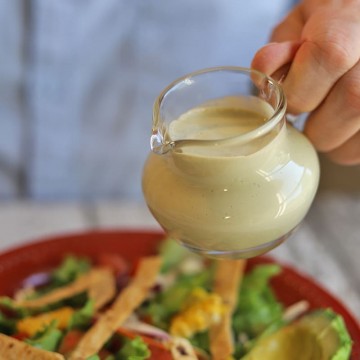
You’re going to want to put this garlicky creamy cashew salad dressing on everything. It stands up to massaged kale. It’s great on romaine with croutons.
Keep a batch in the refrigerator at all times, and watch as your salad intake increases. Vegan & gluten-free.

Outside of work and travel emergencies where there are no other options, David and I rarely order salads in non-vegan restaurants.
It's not because we don't like fresh, delicious greens. At home, we have salads multiple times a week.
However, the thing that's missing with most restaurant salads is a "main event."
I think the reason for this is that most non-vegan restaurants think of the animal products as the main event. Restaurant salads are often covered in fried meats, shreds of dairy-based cheese, and smothered in ranch dressing.
If you're vegan and you've ever been served an iceberg lettuce salad with a few shreds of carrot as your entire meal, you may have wanted to ask the chef, "Would you be full on this?"
Because while a lettuce salad with balsamic vinaigrette can do in a pinch, there are much more interesting, satisfying, and filling ways to get your greens in.
How to create the perfect crave-worthy salad at home
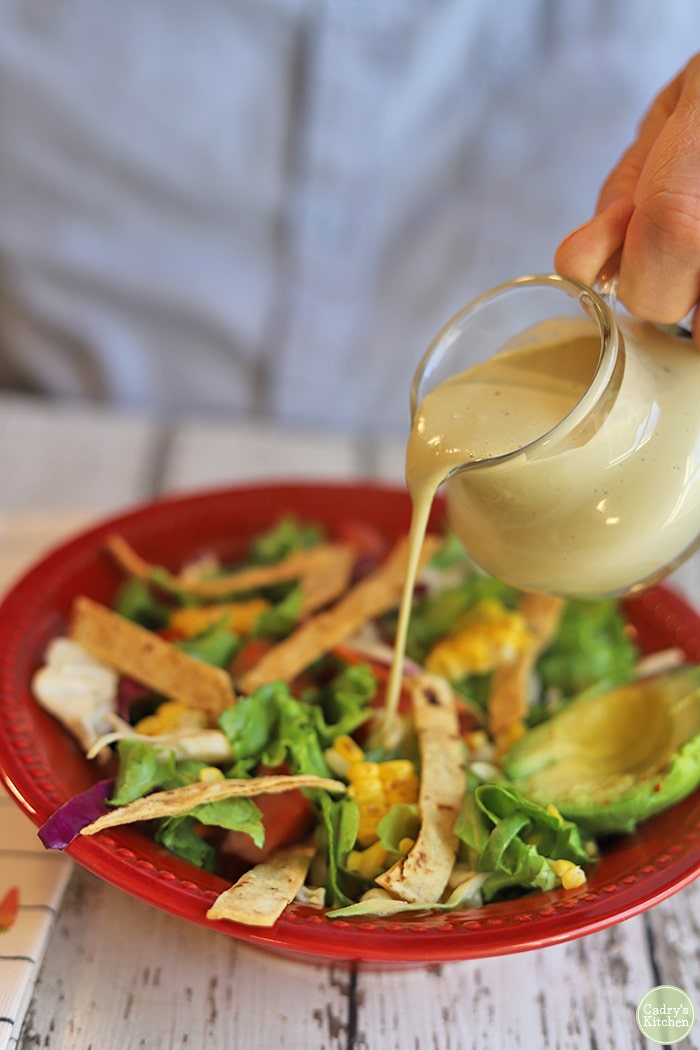
Variety
Each bite should include something different.
When I start on a salad, I look through the produce bins first to take stock of what I have. I usually start with a base of massaged kale, green leaf lettuce, romaine, or spinach.
Then I always include red bell peppers, cucumbers, celery, and tomatoes.
I go for cherry tomatoes during winter months since they retain their sweetness and aren't mealy.
Depending on the season, other possibilities include broccoli, radishes, cabbage, watercress, cauliflower, sugar snap peas, and even berries like strawberries or blueberries on occasion.
Bold flavors
I've heard that what makes an addictive restaurant appetizer is having a balance of sweet, salty, and fatty. When those things come together, it ticks all of the pleasure sensors in the brain.
When I'm making a salad, I like to do the same. Having elements with bold flavors keeps me digging in for more.
I especially like any or all of the following: sauerkraut (especially raw sauerkraut), olives, coconut bacon, dolmas, jarred artichoke hearts, and the marinated cashews from my artichoke crostini.
Texture
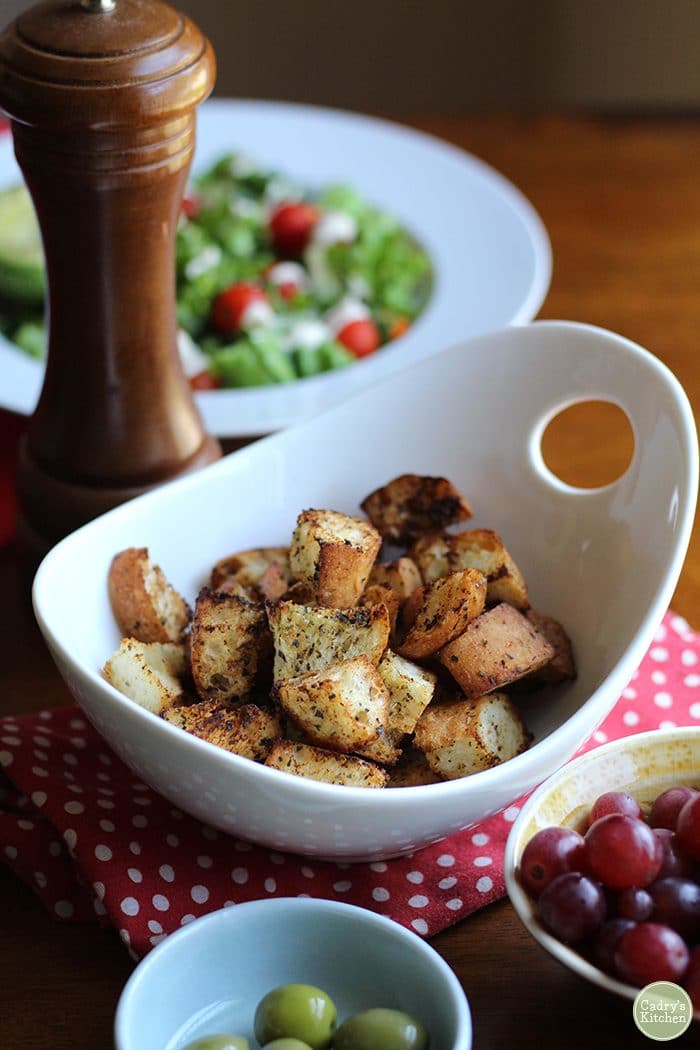
The best salads have a mixture of soft, crunchy, and creamy.
While vegetables themselves have some crunch, for even more I like nuts or seeds like peanuts, pistachios, cashews, almonds, sunflower seeds, hemp seeds, tortilla strips, or homemade vegan croutons.

Something hearty
When a salad is going to be a meal, I like to add at least one protein-heavy component that is hearty.
I often include baked tofu, roasted chickpeas, black beans, or marinated lentils.
When one of these components is involved, the salad really feels substantive, like a full dinner.

Something fatty
Salads are typically thought of as a low calorie meal, which is fine, I guess, if someone is counting calories. But I'm not.
So I want to make sure that there are enough calories for it to be satiating and filling. I don't want an hour to pass and then be hungry again.
Plus, some fat in a salad helps with absorption of certain nutrients. For extra calories and deliciousness, fat is where it's at.
Obviously, avocado makes anything better.
That dreamy fruit was meant for salads (and jackfruit carnitas tacos, and vegan black bean burritos, and vegan tofu scramble, and nachos with cashew queso, and straight out of the peel with a spoon…)
The nuts, seeds, coconut bacon, olives, and tofu mentioned above also have some good fat in them.
And a rich cashew salad dressing adds fat, making every leaf more inviting.
Creamy cashew salad dressing
My favorite go-to salad dressing is creamy cashew salad dressing.
I have been making it for years now. The first time I posted the recipe was way back in 2011. Since then, the recipe has evolved a bit. And I'm sharing it below.
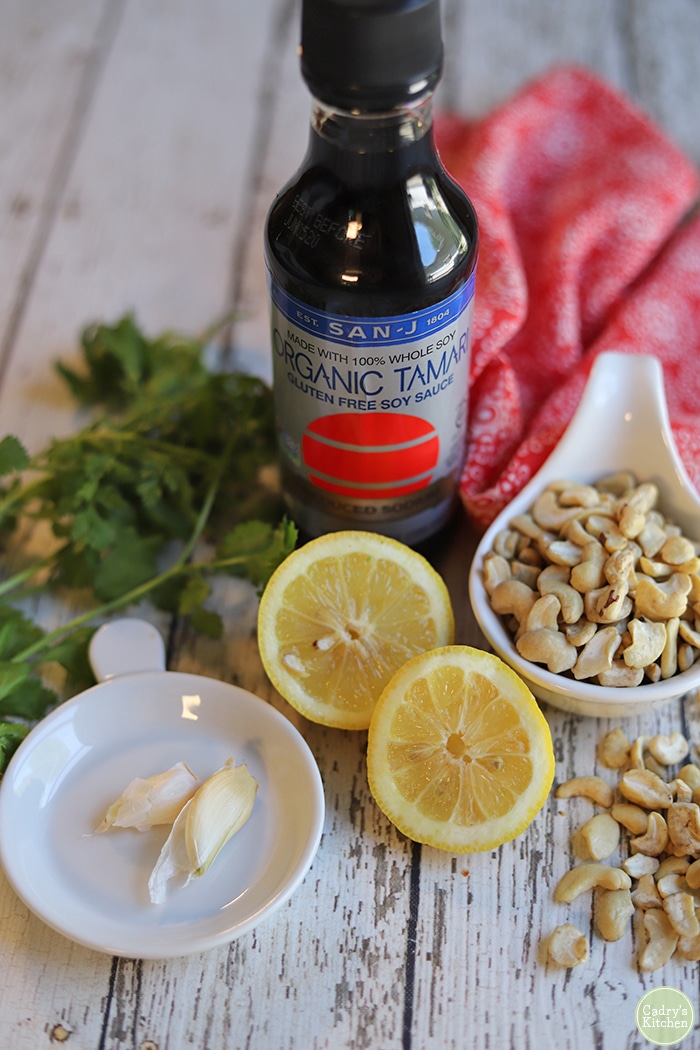
Pour all of the following into a blender:
- A couple big handfuls of raw cashews
- Enough water to cover them
- A squeeze of lemon juice
- A splash of low-sodium tamari
- A clove of garlic
- A small handful of cilantro
Since I have a high-speed blender, I don't have to soak the cashews first, like I did when I originally posted the recipe. Then I adjust to taste.
If it needs more sour, add lemon. More salt or richness, add tamari. More creaminess, add cashews. More liquid, add water.
I've made it without garlic for people averse to it and without cilantro for people who think cilantro tastes soapy. Even without those two ingredients, it's still delicious.
If you don't have a high-speed blender, you have three options:
- Soak the cashews in water overnight and drain before following the recipe.
- Grind the dry, raw cashews first in a coffee grinder until they become a flour, and then put them in the blender.
- Cover the cashews in boiling water and let them soak 10-20 minutes before draining and using.)
The creamy cashew salad dressing has a wonderful mix of umami from the tamari, tanginess from the lemon, and hit of garlic.
I especially like it on kale salads, because it's a full-bodied dressing that can stand up to the boldness of kale. It’s also great on a Southwest salad, or used as a dipping sauce for fried olives.
The velvety texture of the dressing is yet another reason why cashews are the magicians of nuts. Who would have guessed that cashews could make a dressing so creamy without any dairy at all?
While I have made a ton of different dressings over the years, this is the one I keep coming back to. It's my all-time favorite.
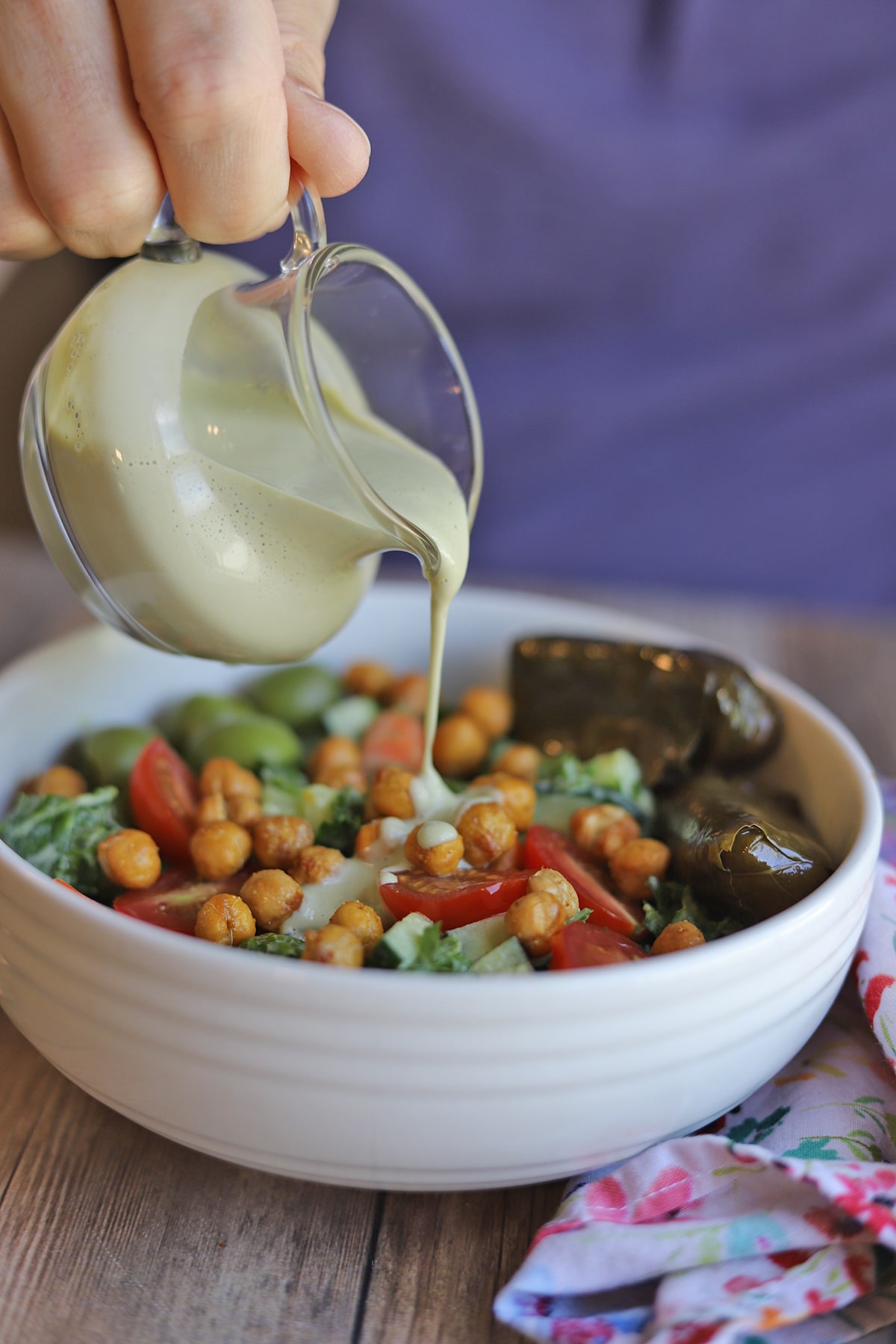
📖 Recipe
Creamy cashew salad dressing
Ingredients
- ½ cup raw cashews*
- ½ cup water
- 1 Tablespoon lemon juice
- 1 Tablespoon tamari
- 1 heaping Tablespoon fresh cilantro leaves
- 1 small clove garlic
Instructions
- Put all of the ingredients in the blender and blend until smooth.
- Enjoy right away on a salad. Or move to a covered container in the refrigerator until ready to use.
Watch how to make it
Notes
- Soak the cashews in water overnight and drain before following the recipe.
- Grind the dry, raw cashews first in a coffee grinder until they become a flour, and then put them in the blender.
- Cover the cashews in boiling water and let them soak 10-20 minutes before draining and using.)
Nutrition
Content and photos updated June 2020. Originally posted February 2011.


Megan
Absolutely divine and simple recipe. I made it for meal prep tofu bowls and was so happy. It thickened in the fridge so I’ll add more water next time. I’ll be making this again.
Cadry Nelson
So glad you’re enjoying the dressing, Megan! Thanks for the great feedback.
Raw cashews have a way of thickening sauces once chilled. I recommend just adding a splash of water to get it to your preferred consistency again.