


People sometimes assume that making vegan meals is labor intensive or hard. But really, it’s easy to make some simple substitutions to dishes that are already in your repertoire!
In this post I offer ten easy vegan meals for beginners, plus a printable version for your refrigerator!

I was recently thinking about my friend, Julia, who moved to the United States many years ago from her homeland, Germany.
Julia is multi-lingual. After living and working in California for all this time, she even thinks and dreams in English.
That is fascinating to me. Because even after taking two years of Spanish in high school, two years of Spanish in college, and touring with a children's theatre show that utilized the Spanish language, my Spanish is still very… basic.
Let's just say if you needed to find a bathroom or the library in Mexico, I would be capable of asking a local.
Once they gave the answer, you're on your own.
In this post:
Going vegan is like learning a new language

In a way, going vegan is like learning a new language.
At first, it's a struggle.
You're looking over a vegan restaurant menu.
Some of the things may seem unfamiliar - tempeh, seitan, Daiya, perhaps even quinoa.
Or you're at a diner and flummoxed over how to get vegan meals at a non-vegan restaurant.
Maybe you're at home and thinking about your regular dinner rotations and in your mind crossing X's through all of your favorites with a big red marker in your mind.
Then after being vegan for a while you become fluent.
It's seamless.
You look over a vegan restaurant menu. And you've had all those things dozens of times before.
Outside of vegan restaurants, you know which things can trip a person up.
You ask your server ahead of time about chicken broth in the rice, lard in the beans, fish sauce and oyster sauce in the stir-fry, ghee on the na'an…
You know how to make easy substitutions, like more vegetables in place of meat on your pasta or to request salsa on your baked potato instead of animal-based butter.
It becomes second nature.

That's why when someone I know is considering going vegan, this is my recommended first step – use the idea of learning a foreign language to your benefit.
If I wanted to ask, "Where is the library?" in Mexico, I might need to break down each word.
(Okay, my Spanish isn't that bad, but just go with me here…)
First I need the word Where. Dónde. Is. Está. The. La. Library. Biblioteca. I just sub in Spanish for English, and I have, "¿Dónde está la biblioteca?"
Similarly, it can feel stressful at first when you're hungry and just want to eat to stare in the refrigerator, think of all of your old habits, and then wonder, what now?
Dios mio, tengo hambre.
Instead of eating every meal out at a vegan restaurant or feeling like even a quick lunch requires cracking open a cookbook, think about the 10 meals you regularly eat at home.
Then swap out the animal protein with a vegetable protein.
After making a list of ten things, it would look something like this, along with the easy swaps I could make…
Pasta

Most dried pasta is vegan. Just check the ingredient label.
Then instead of meat in the sauce, choose lentils, seitan, vegan sausages, or loads of vegetables in jarred spaghetti sauce over whole wheat pasta.
Top with a sprinkling of homemade vegan parmesan cheese.
Tacos, burritos, or fajitas
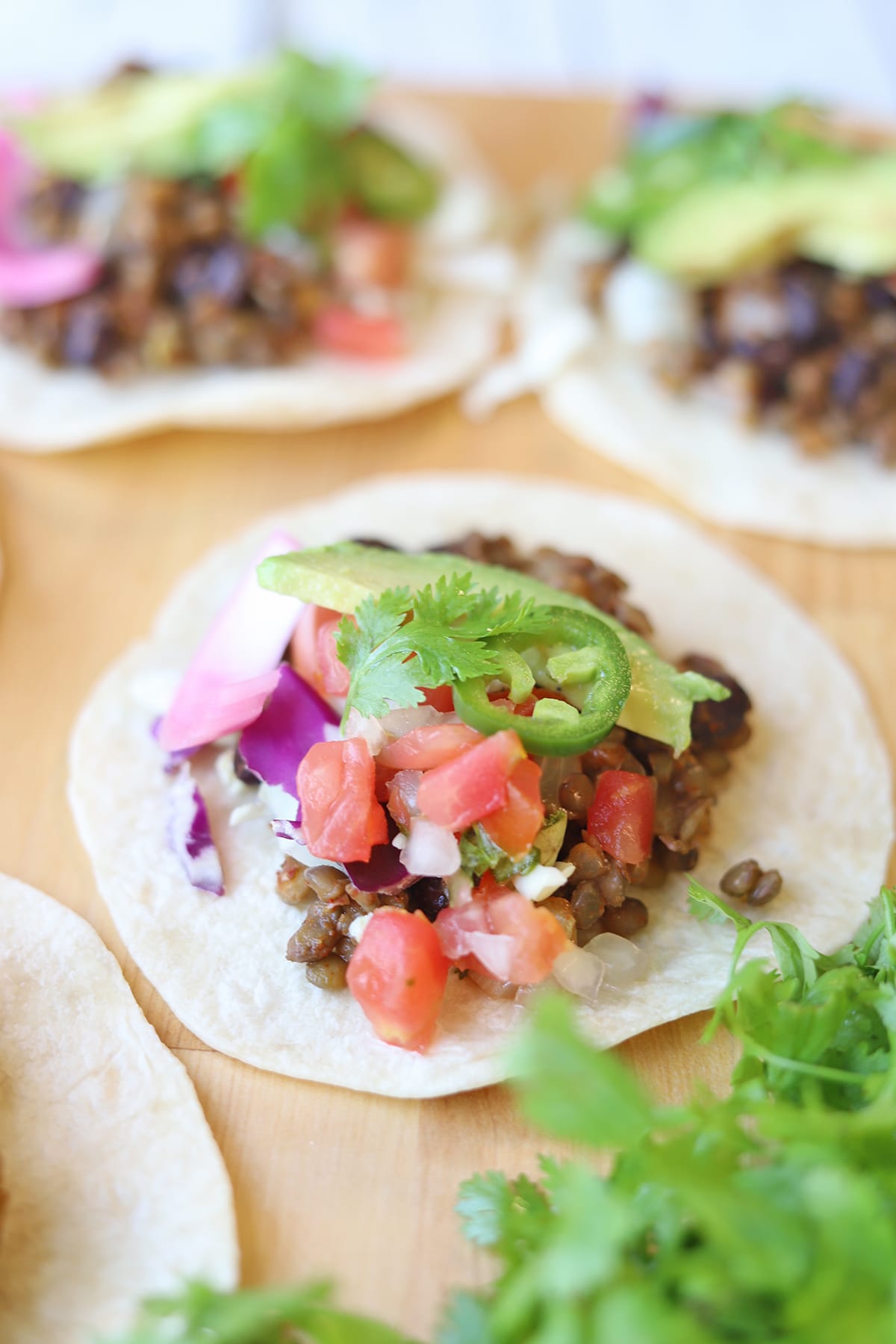
Fill corn or flour tortillas with pinto or black beans instead of ground beef. Stuff with tomatoes, green leaf lettuce, and onions.
Top with avocado or guacamole instead of cheese and sour cream. Or grate some Daiya cheddar block vegan cheese on top.
The tacos above are double decker tacos with black and refried beans. Or you could bake the tortilla into a bowl-shape for a taco salad.
For vegetable fajitas, cook sliced bell peppers, onions, and mushrooms in a grill pan, outdoor grill, or sheet pan.
Season them with lime juice, oil, paprika, cumin, and chili powder.
Then serve on warmed corn tortillas with vegan refried beans on the side – homemade or store-bought.
Pizza

Making pizza with meat or without is virtually the same recipe. You just leave off the meat!
Then you can go cheeseless. Or use vegan cheese like Miyoko’s or Violife mozzarella.
Simply spread jarred tomato sauce and your favorite vegetables onto a pizza crust.
Prefer something meaty? Beyond Meat sausages are really good on a pizza.
Keep them in your refrigerator or freezer. Then pull one out to thaw (if necessary), slice, and brown before adding it on top of your pie.
Vegan taco pizza is also a big favorite in our household.
Top a crust with sauce, and your choice of spicy black beans, vegan chorizo, or vegan sausage that’s been browned in a skillet. Then finish with lettuce, tomatoes, onions, and a handful of crushed tortilla chips.
Buy a pre-made or frozen crust, purchase refrigerated dough, or make your own!
Soup
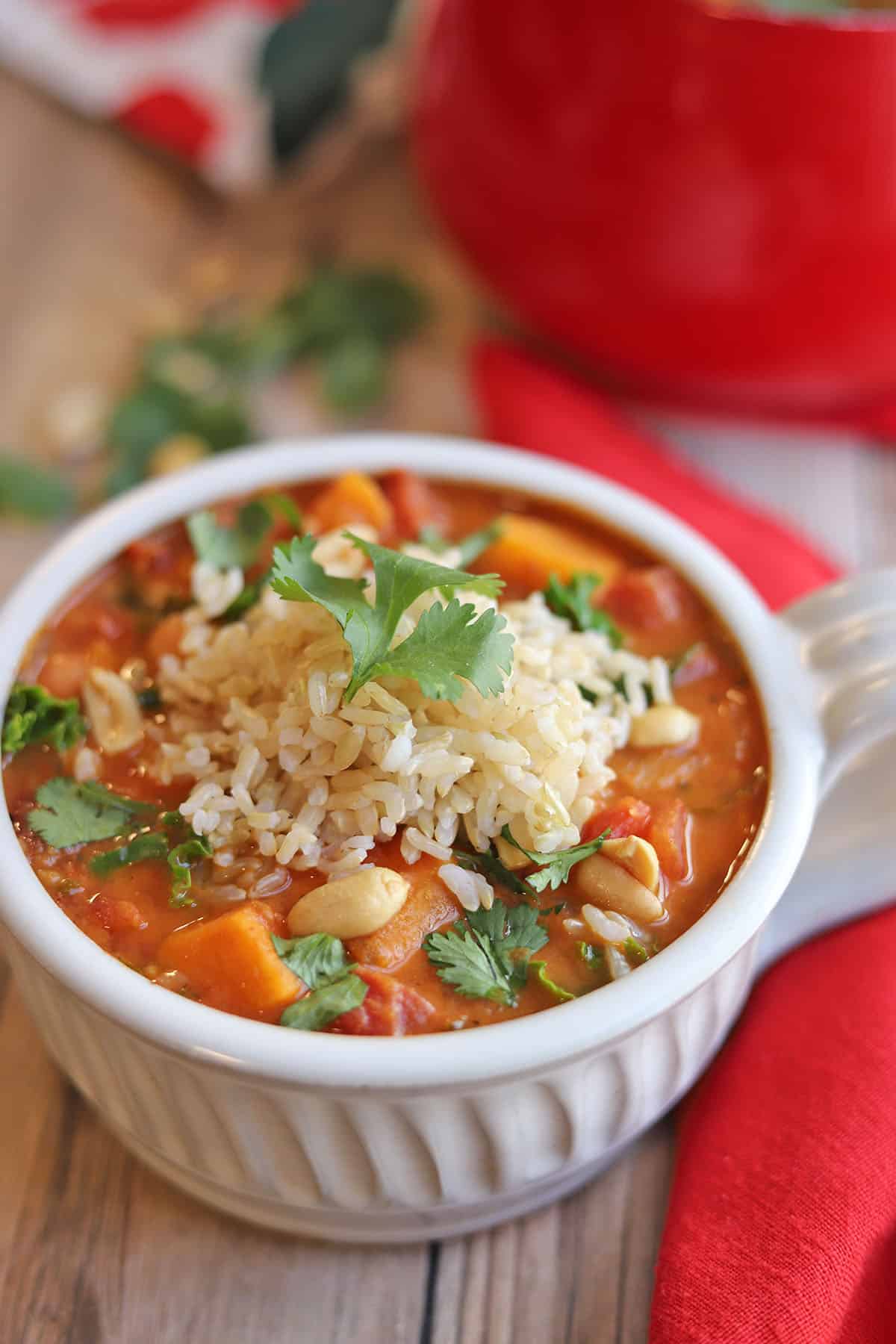
Soups are the ultimate clean-out-the-refrigerator meal.
Sauté onions and garlic. Then add vegetable broth, and the vegetables of your choice.
Or consider these easy vegan soup ideas:
- Sweet potato peanut stew (above)
- Split pea soup
- Curry lentil soup
- Creamy vegan tomato soup
- Potsticker soup with store-bought dumplings
- Vegan ramen noodles
- Vegan baked potato soup
- Vegan miso soup
Sandwiches

Sandwiches are so easy to make on the go. Just add mustard, onions, and pickles to bread along with vegan deli slices.
There are all kinds of vegan deli slices on the market. I’m particularly fond of Tofurky hickory smoked deli slices.
Or make a BLTA with seitan bacon, lettuce, tomato, and avocado.
(Herbivorous Butcher makes my favorite vegan bacon. Upton’s Naturals is a good second choice!)
If you were a tuna salad fan, use chickpeas instead! Break down chickpeas in the food processor and mix them with an eggless mayonnaise, diced pickles, and chopped celery for vegan tuna salad.
A vegan egg salad sandwich is ready in just minutes with tofu, eggless mayo, mustard, and spices.
Or do a bagel sandwich with hummus, red bell peppers, onions, and spinach.
Chili

Chili is simple to veganize.
Start with onions, garlic, and spices just like you usually do.
Then throw in brown lentils, seitan, and/or as many varieties of beans as you like instead of ground beef. Add canned diced fire roasted tomatoes.
Finish with a topping of crushed corn chips or salsa.
Or here are some easy vegan chili recipes:
- Lentil chili with pinto & black beans (above)
- Vegan three bean chili (the most popular chili on my site)
- Meatless chili with Soy Curls & beans
Stir-fry

Buy or make baked tofu instead of chicken or shrimp and stir-fry with a ton of veggies.
Splash on tamari, rice vinegar, and sriracha to taste.
Top with a handful of cashews and cilantro. And serve with a side of brown rice, cauliflower rice, or rice noodles.
And maybe some vegan potstickers & gyoza dipping sauce as well?
(Trader Joe’s Thai vegetable gyoza are a well-loved favorite in my house.)
Mediterranean wrap
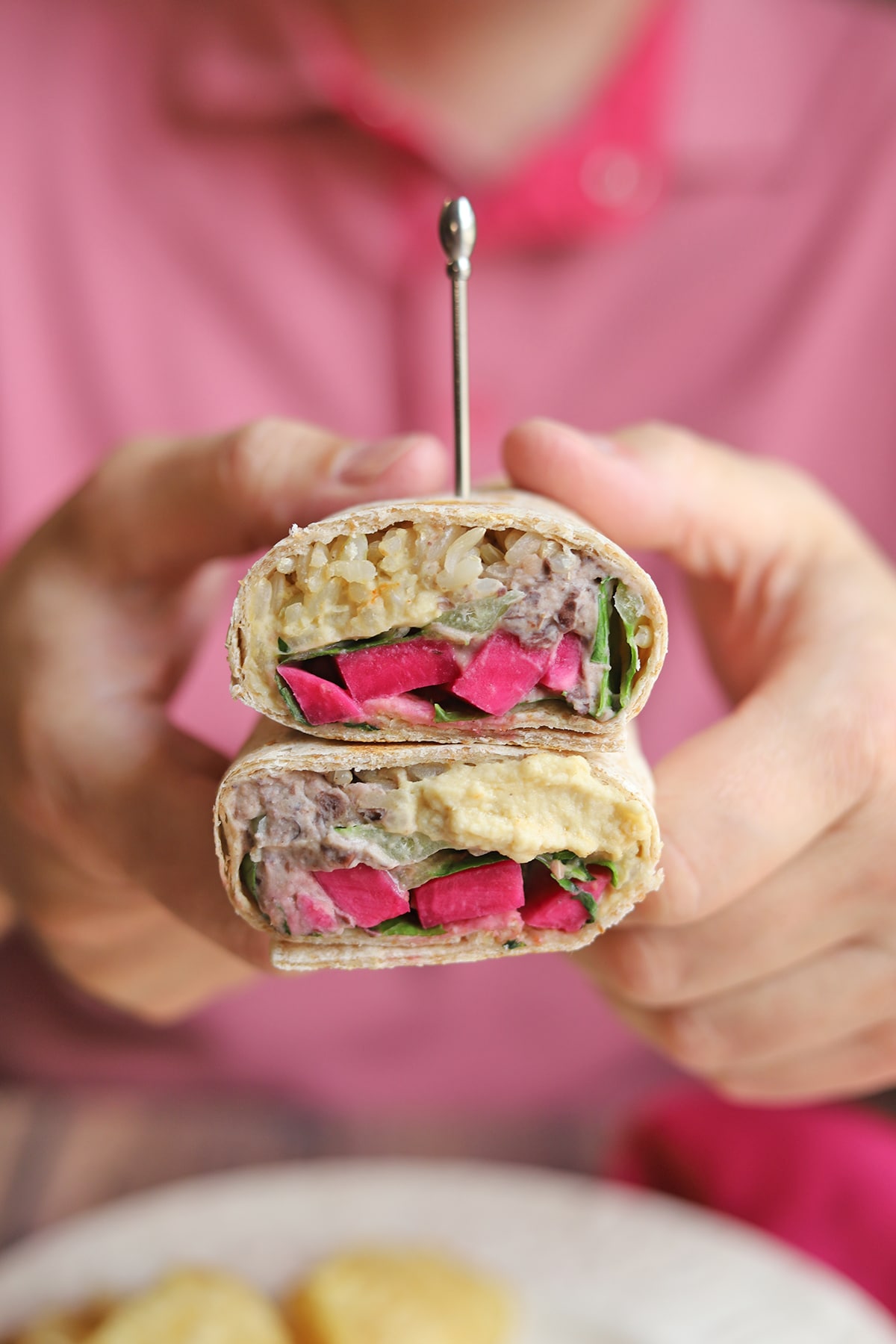
Instead of meat on a kebab, bake falafel, add tahini, hummus, diced tomatoes, and chopped leafy greens.
Stuff all of that into lavash, a tortilla, or collard leaf.
Serve with prepared dolmas and tabouli.
Or make double hummus wraps with regular chickpea hummus, black bean hummus, rice, lettuce, and turnip pickles.
Salad

I know salads are a little obvious when it comes to vegan options.
But hey, salads are delicious and nourishing.
Toss leafy greens, in-season vegetables, and roasted chickpeas or baked tofu with a vinaigrette or creamy dressing.
Serve with crusty bread smeared with roasted garlic or air fryer croutons.
Curry

Instead of meat in your favorite curry sauce, choose tofu, seitan, or chickpeas.
(Chana masala or whole masoor dal, anyone?)
Serve with turmeric rice.
Or make an easy curried tofu salad with eggless mayo, cubed tofu, curry powder, celery, carrots, and raisins. It’s ready in 10 minutes!
More quick vegan meals
Here are more easy vegan meals that anyone can make:
- Air fryer baked potato
- Vegan refried bean quesadilla
- Hummus bowl with roasted cauliflower
- Tortilla pinwheels with buffalo hummus
- Eggy tofu (vegan eggs)
- Cold peanut noodle salad
With time, vegan meals are no longer complicated.
You become fluent in Vegan, and you no longer have to peg new ingredients into your old habits.
It's just your usual dinner of vegan refried bean burritos or your typical breakfast of blueberry-topped oatmeal.
That is deliciously simple in any language.
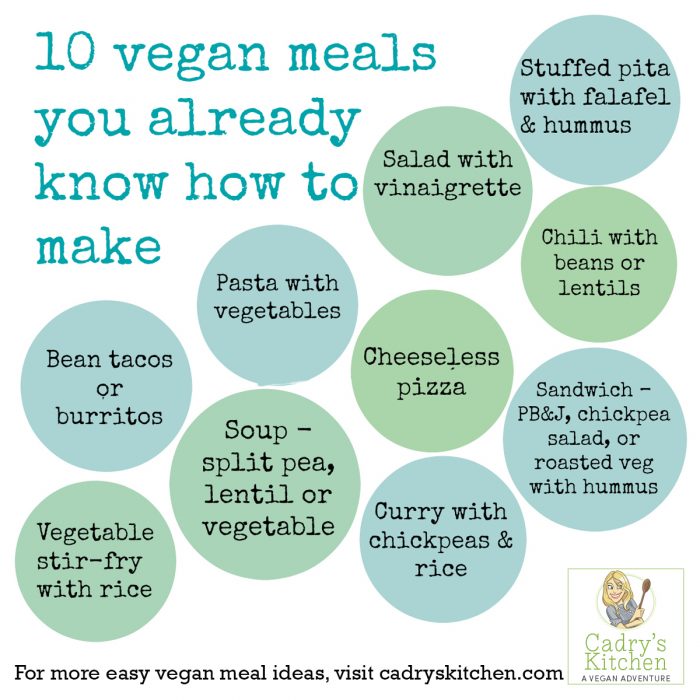
To get a streamlined printable version for your refrigerator, click here:
Content and photos updated October 28, 2022. Originally posted September 2012.
Mary Dmyterko
Thanks so much, Cadry. Even for a long time vegan like me, these food choices remind me of the variety of meal options there is. This list made me think about what I can do to jazz up meals and it also made me hungry.
To the Better than Tuna and Eggless Tofu salad, I add black salt to get the eggy flavor.
Cadry
I’m glad the list was helpful, Mary! I’m a big fan of black salt too. It’s a kitchen staple for sure.
Sylvia Clay
Wow, that is great. I love the 10 replacement ideas. I love the ideas and I already love the ingredients that are the replacements. I can do this.
Cadry
That’s excellent, Sylvia!
Anonymous
I am 15 and a vegetarian who is almost vegan. I am a picky eater, even I will admit it. You blog has been the most helpful piece of information I have had. I loved the comparison to learning a new language. I would be vegan but my parents are exstreamly unsupportive about it.
Cadry
Thanks for writing! I’m glad that my blog has been a help to you! Have you shared with your parents the reasons you have for wanting to be vegan? Maybe if you showed them some videos or books that inspired you/compelled you to want to go vegan, they would understand why you want to make the transition. Best of luck to you, and if there’s any way I can help, please don’t hesitate to ask! 🙂
burbankvegan
This list is great! I’ve been vegan for 5 years, but I still printed your recipe list out, because it will be nice to reference this list instead of scouring all my cookbooks when I’m in a rush. 🙂 Sometimes my mind goes blank when it comes time to answer the question, “So, what’s for dinner?”
Cadry
I’m so glad it was helpful! I’m working on making a version that will be a bit more eye-catching and streamlined for easy printing. I’ll keep you posted!
Kristy
This is such a great analogy. I’ve often compared it to moving to a new country, with a different culture- spending hours in the grocery store, staring at foreign food items, trying to figure out what they are and how to prepare them; learning to cook in a foreign kitchen that uses different appliances than your former kitchen; trying to translate menus in restaurants. Veganism is a whole culture within itself and it does take time acclimate.
This post is such a great post for new vegans or those curious about veganism, and you’ve done a great job demystifying the language. 🙂
Cadry
I like your comparison to entering veganism being like navigating a foreign country. It can be a lot to take on all at once! That’s why I think when we can ease into it with our own standbys and a few easy substitutions, it makes the whole process a lot less complicated. Added to the fact that it can make a person feel self-conscious to make requests at restaurants if she/he hasn’t done that before or answer curious family members and friends about the particulars of veganism, and the whole thing can feel a bit like adolescence! 🙂
Suburban Snow White
What a great way to explain this transition. You’re right. Initially you have to think carefully at each meal, going step by step. You make goofups. The small successes are huge. And then, eventually, it’s all second nature. Brilliant analogy, Cadry! I may borrow that one when people ask about transitioning to vegan food. Thank you!
Cadry
I’m glad that the analogy rang true for you! Years later it’s easy to forget that there was a time I didn’t eat loads of lentils, chickpeas, kale, and collard greens. There was a time in my life when I was going through the fast food drive thru or having regular meals of frozen dinners from Trader Joe’s. What is “normal” to each of us is always shifting. Now when I see fast food bags in someone’s car, it seems very foreign! It seems like so long ago that I got my dinner through a window!
Allysia Kerney
Insightful comparison. 🙂 And like learning a language, it’s extremely helpful to have someone around who knows the ropes and can show you what’s what! It makes a huge difference. A long time ago I dated a vegan guy, and I was a vegetarian at the time, but I learned so much about veganism from him that years later, it was just easy to switch. And nowadays my boyfriend is transitioning to veganism and it’s just easy with all the awesome vegan cheeses and such that exist! The only hassle tends to be eating out at restaurants you don’t choose, but that’s pretty minor. 🙂
Cadry
So true! It does demystify it when you watch how someone else navigates living vegan in a non-vegan world. It is awesome how many specialty products are becoming mainstream. Even from the time I went vegan five years ago to now, there are so many more products available, especially in small town America. I remember when Daiya was hard to come by even in Los Angeles, and now it’s all over the place! That’s great that you had someone whose lead you could follow, and then you were able to be that guide for your current boyfriend.
I agree that it’s harder when eating out at restaurants that aren’t of your choosing. When I gave the above example about a diner, it made me think of how that would be my last choice when it comes to dining out. An ethnic restaurant is easier most of the time. It can be done at a diner, of course, but the results are sometimes lackluster.
Richa
so well put Cadry. It indeed is like learning something completely new, language, skill or anything. A friend’s wife was frustrated about her daughters party not being vegan, so he went to the pizza chef who was catering the event and converted the pizza and salad to vegan. it was a thai peanut sauce pizza, and just needed the cheese off!
The smile on her face for the next 2 days was priceless:)
In the last 2 years, i have started seeing menus in restaurants changing to indicate vegan or can be made vegan options, taking the guess work out and making life simpler. making learning the language so much easier with some english translations in there:)
Cadry
I like your comparison about “translations” on the menus! It does simplify things so much. I’m much more likely to visit a restaurant regularly when they make it clear which items are vegan-izable. Plus, it gives me some faith that the chefs have a clearer understanding of what “vegan” means.
Vic (The Life)
Very nice informative post!
Cadry
Thanks, Vic!
cookeasyvegan
What a great primer for new vegans and vegetarians. It not only offers comforting assurances on navigating the veg learning curve, you’ve provided a wonderful list of delicious and easy to prepare meals. You should make a graphic of the list so people can print it out and hang it in the kitchen!
Cadry
That’s a really good idea, Andrea! I’ll put that together!
Kittee-Bee Berns
Andrea is very smart! Nice work, Cadry!
xo
kittee
Cadry
Yes, she is! Thanks, Kittee! 🙂
bree
Hello, this is so helpful – thank you!! Did you put together the graphic by any chance?
Cadry
No, I never did that! Thank you for the reminder, Bree. I’ll make it a goal for this week. I’m glad to hear that the post is helpful!
Cadry
Hi, Bree!
I made the printable today. I hope it works for you! You can find it here: http://cadryskitchen.com/wp-content/uploads/2016/02/10-vegan-meals-you-know-how-to-make.pdf